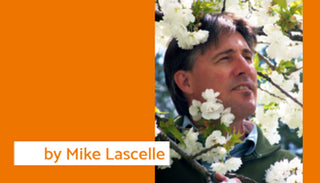

As a kid growing up on mundane Canadian Air Force bases (with no gardens and very few trees), I spent the entirety of my summer days wandering the forests that often surrounded them. So, whether I was snacking on Saskatoons or choke cherries in central Saskatchewan, plodding through swamps around Trenton Ontario or riding my bike along the trails that ran beside the river of Winnipeg’s Assiniboine Park, I came by my love of flora naturally.
Vacations spent at my grandmother’s Westbank home introduced me to the savanna-like Ponderosa Pine grasslands and my early days working as a landscaper on the North Shore in the 80’s and 90’s taught me how such diverse ecosystems as a temperate rainforests (Lynn Valley) with lush fern and Vine Maple understories could exist within a 10-minute drive from rugged dry coastal bluffs in West Vancouver where Arbutus, Oceanspray (Holodiscus discolor) and Red-Flowering Currant thrive in the meager screes that exist between weather-worn rock outcroppings.
This experience gave me the insight that even indigenous plants need careful placement that mimics their natural ecology in order for them to thrive. That said, a few native species are quite resilient and seem very adaptable in urban landscapes and here are a few of my favourites, with a couple of precarious ones thrown in for sheer beauty.
Oregon Grape (Mahonia aquifolium)
A beautiful broadleaf evergreen with holly-like foliage, bright yellow blooms that the hummingbirds adore and edible blue fruits that make a delicious jelly. This versatile plant thrives in exposures ranging from open shade to full sun and it is prickly enough to be an excellent deterrent hedge. Grows 3-6’+ high. Hardy to USDA zone 5.
 .
. 
📸 MK Lascelle
Pacific Madrone (Arbutus menziesii)
A local beauty found in West Vancouver and along the Sea to Sky highway, I later discovered during a kayak excursion that the west side of Pitt Lake also has some beautiful specimens. While the peeling reddish-brown, ochre and yellow bark is the highlight, the evergreen foliage, white bell-shaped blossoms and red fruits are equally attractive. Difficult to establish but worth the effort. Grows 20-50’ tall on average. Hardy to USDA zone 7.

📸 MK Lascelle
Bog Rosemary (Andromeda polifolia)
This much underutilized evergreen shrub works much the same as heather with its green rosemary-like foliage and bubblegum-pink flowers, except that it can handle very wet soils. Despite the common name, it is not edible and you are most likely going to have to purchase the glaucous-leaved cultivar, ‘Blue Ice’. Grows 12-16” tall. Hardy to USDA zone 2.

📸 MK Lascelle
Round-Leaved Sundew (Drosera rotundifolia)
Here’s a beauty you are not likely to find for sale (try looking for Drosera capensis instead) but the tiny rosettes of leaves studded with red-stemmed sticky glands are worth exploring for. This one I found growing in a sphagnum moss hummock on the west side of Whonnock Lake, although the only place to view it from is a boat or kayak. If you look carefully at the topmost leaf, you can spot a few bugs that are already stuck. Grows 2-8” tall. Hardy to USDA zone 3.

📸 MK Lascelle
False Solomon’s Seal (Smilacina racemosa)
This species has been renamed Maianthemum racemosum, although most of the plant tags still refer to its old botanical or common name, which is False Solomon’s Seal. It is an herbaceous perennial suitable for deep shade which eventually forms a large clump and bears delicate white feathery plumes from late spring into summer. Grows 2-3’ tall. Hardy to USDA zone 4.

📸 MK Lascelle
Osoberry (Oemleria cerasiformis)
One of the first forest shrubs to bloom in late winter with greenish-white flower clusters followed by tiny plum-like fruits that ripen from orange to deep blue. These are edible but should be consumed in moderation and although there are both male and female plants, they are often not sexed in the plant trade. Overwintering Anna’s Hummingbirds adore the nectar. Grows 8-15’ tall. Hardy to USDA zone 6.
 .
. 
📸 MK Lascelle
Evergreen Huckleberry (Vaccinium ovatum)
Here’s an evergreen shrub that everyone should have in the garden, as it grows in deep shade (where it will be taller) and full sun, with the latter exposure keeping it more compact. The new growth is a lovely coppery-red hue and is followed by pink-tinted heather flowers and musky-tasting black berries that ripen late summer into autumn. Grows 3-8’ tall. Hardy to USDA zone 7.

📸 MK Lascelle
Nodding Onion (Allium cernuum)
A great culinary plant with edible bulbs, leaves and flowers that indigenous peoples have been cultivating since well before first contact. The nodding pink blooms are also quite attractive, and it readily adapts to being grown in containers, as I have been enjoying my potted specimen for over ten years now. Grows 12-18” tall. Hardy to USDA zone 4.

📸 MK Lascelle
Bunchberry (Cornus canadensis)
This beautiful but hard to establish semi-evergreen groundcover thrives in the forest shade and features deeply veined whorled leaves that nestle a tiny white dogwood flower (made of bracts) which eventually produces a small cluster of bright red berries. The foliage shifts to a burgundy in colder weather. Grows 3-9” tall. Hardy to USDA zone 2.
 .
. 
📸 MK Lascelle
Salal (Gaultheria shallon)
This highly variable evergreen groundcover is capable of reaching heights of 10’ tall (with deer trails running through it) under optimal conditions but is often much more compact when planted with sun in urban conditions. The white heather-like blooms are followed by edible black berries, although you have to catch them during their 10-day prime or they will get rather mealy and less flavourful. Grows 1.5-10’ tall. Hardy to USDA zone 6.

📸 MK Lascelle
Common Juniper (Juniperus communis)
An extremely cold-hardy juniper native to the entirety of the northern hemisphere with needled, instead of the usual scaled foliage. The real bonus here are the edible bluish-black berries, which are used as a spice to flavour gin or add to the turkey brine (with a bottle of white wine) at Thanksgiving. Species grows 1-5’ tall. Hardy to USDA zone 2.

📸 MK Lascelle
Red-Flowering Currant (Ribes sanguineum)
I saved the best for last because I consider Red-Flowering Currant to be the showiest and easiest to grow BC native. The early blooms are an important hummingbird nectar source and the pink to carmine-red flowers are prolific and stunning. An alba form, ‘White Icicle’, is also available. Grows 5-10’ tall. Hardy to USDA zone 6.

📸 MK Lascelle
Due to the recent high demand for BC native plants in commercial landscapes, supply can be quite limited. So, now is the best time to go shopping for them at Amsterdam Garden Centre.
Copyright 2026 MK Lascelle